This is the central idea behind Public Procurement of Innovation (CPI, by its Spanish initials), an initiative led by Paraguay's National Directorate of Public Procurement (DNCP), with support from the Inter-American Development Bank (IDB). It could represent an important shift in how Paraguay's public sector adopts technology.
From buying products to procuring solutions
Traditionally, when a procurement unit needs to acquire technology, it draws up tender specifications that often reflect solutions already available on the market. I have also encountered astronomical requirements backed by little or no budget.
Innovation procurement is like an open hackathon: a competition seeking proposals to solve complex problems that cannot be addressed with existing options.
The fundamental change is that the government stops defining in advance what the solution must look like and starts by explaining the problem it needs to solve.
This allows companies, startups, universities and research centres to propose alternatives that the institution itself may never have considered.
In my view, this approach makes a great deal of sense. Those of us who develop technology know that one of the main challenges in a project is not necessarily programming, but correctly understanding the problem we want to solve.
Two concrete challenges in Paraguay
At the presentation of this initiative, two pilot projects were introduced that illustrate the potential of this model.
ESSAP: reducing commercial water losses
Paraguay's water utility, Empresa de Servicios Sanitarios del Paraguay, presented its challenge, AcquaStop, aimed at reducing commercial drinking-water losses.
According to the figures presented, the institution estimates commercial losses of approximately USD 3.65 million per year.
The problems identified include illegal connections, measurement errors, non-functioning meters, outdated records and a lack of integration between IT systems.
One particularly striking figure is that only 54% of the connections considered have individual water meters, while 88% of customer records are outdated to some degree.
The institution is looking for solutions that incorporate proactive detection of irregularities, automatic alerts, meter geolocation, consumption analysis and interoperability with its existing systems.
From a technology perspective, this is a problem that could be addressed by combining big data, automation, telemetry and large-scale data exchange.
This is more than a search for software. It is a management problem that needs a comprehensive technology-based solution.
ANDE: technology and community engagement to reduce electricity losses
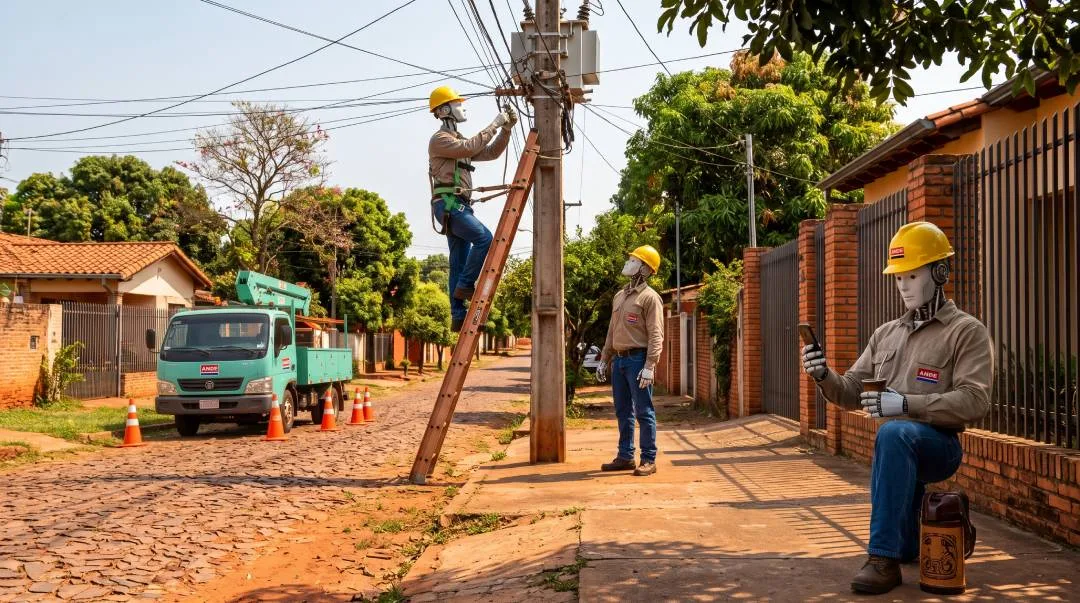
The second public-sector problem presented at the launch of Public Procurement of Innovation came from the National Electricity Administration (ANDE), through its Energía Segura project.
ANDE presented a particularly complex problem: non-technical electricity losses in informal settlements and socially vulnerable communities.
The example given was Nueva Asunción, in Luque, where there are approximately 500 homes, but only 175 have meters installed.
Energy losses in that area are approximately 86%, with an estimated economic impact of USD 290,000 per year.
The institution aims to develop a pilot model that significantly reduces these losses through technology, monitoring and social intervention strategies.
The solution here is not purely technological. It will probably require a multidisciplinary team that includes psychologists, sociologists, lawyers and architects. Addressing the underlying problem has a social dimension.
Greater losses = Greater opportunity
Instead of competing solely on price or on compliance with predefined technical specifications, companies can contribute knowledge, creativity and research and development capabilities.
This represents a particularly interesting opportunity for small and medium-sized software companies, startups and specialist teams. This type of procurement does not require a prior track record as a government supplier.
It will be essential for public institutions to have the technical capacity to assess innovative proposals and support their implementation.
The cost of these problems is now on the table. The solutions should cost less than the problems themselves.